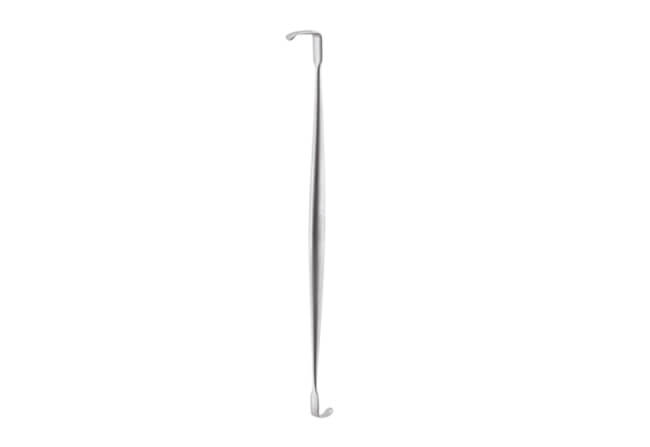
The Ragnell-Davis Retractor is an essential dental instrument used primarily in oral and maxillofacial surgery, designed to provide optimal exposure and access to the surgical site. This versatile tool is highly regarded for its efficiency in retracting soft tissues, such as the gums and cheeks, to ensure a clear and unobstructed view during various dental procedures. Its robust construction and ergonomic design make it a must-have for dental professionals who frequently perform complex surgeries.
Design and Features
The Ragnell-Davis Retractor is characterized by its flat, wide blade and a long handle. The blade is designed to gently retract soft tissues without causing undue trauma, ensuring minimal discomfort for the patient. The handle, typically made of stainless steel, offers excellent grip and control for the practitioner. The retractor’s curved shape allows for precise manipulation in hard-to-reach areas, particularly in the back of the mouth, where visibility and accessibility can be challenging.
One of the defining features of the Ragnell-Davis Retractor is its dual-action mechanism. The blade can be adjusted to different angles, providing flexible retraction that suits a variety of surgical needs. Whether it’s retracting the cheek during a molar extraction or managing soft tissue during periodontal surgery, the Ragnell-Davis Retractor delivers consistent performance. The instrument comes in different sizes, allowing dental professionals to select the one that best suits the patient’s anatomy and the specific requirements of the procedure.
Functionality in Dental Procedures
The primary function of the Ragnell-Davis Retractor is to provide visibility and access to the surgical field. It is often used in procedures such as extractions, periodontal surgeries, and root canal treatments. The retractor’s wide blade allows for effective tissue manipulation without causing damage to the surrounding structures. This is particularly important in delicate procedures, where precision is critical to avoid complications.
In tooth extractions, for example, the Ragnell-Davis Retractor can be used to gently move the cheeks or lips away from the site, ensuring the dentist has a clear view of the tooth being removed. This enhances the safety and speed of the procedure, reducing the risk of accidental injury to surrounding soft tissues.
Similarly, in periodontal surgeries, the retractor is invaluable for retracting the gums away from the teeth and bone, allowing the surgeon to access the affected area for cleaning, scaling, or grafting. The instrument’s ability to hold the tissues in place without slipping or causing discomfort is vital for ensuring a smooth procedure.
Advantages and Benefits
One of the key advantages of the Ragnell-Davis Retractor is its precision. Its design allows dental professionals to control the amount of tissue retraction, ensuring that only the necessary amount of soft tissue is moved without disrupting other parts of the oral cavity. This is particularly important in complex surgeries where a delicate touch is required.
Moreover, the retractor’s ergonomic handle reduces hand fatigue, allowing for better control over extended periods. This feature is essential for lengthy surgeries, as it enables the dentist to maintain a steady grip and minimize the risk of injury or errors during the procedure.
The instrument’s durability is another significant benefit. Made from high-quality stainless steel, the Ragnell-Davis Retractor is resistant to rust and corrosion, making it suitable for repeated use in a busy dental practice. Its longevity contributes to its cost-effectiveness, as dental professionals can rely on it for many years without the need for frequent replacements.
Conclusion
The Ragnell-Davis Retractor is an indispensable tool for dental professionals involved in surgical procedures. Its ability to provide excellent exposure and retraction of soft tissues makes it an essential part of a dental surgeon’s toolkit. With its ergonomic design, versatility, and durability, the Ragnell-Davis Retractor ensures that dental procedures are performed with precision, safety, and minimal discomfort for the patient.


Reviews
There are no reviews yet.