The Periosteal Howarth Elevator is a dental instrument commonly used in oral surgery procedures, particularly during tooth extractions and periodontal surgeries. It is designed to elevate and reflect the periosteum (the tissue surrounding the bone) from the underlying bone, which is a crucial step in various surgical interventions. This instrument is widely appreciated for its ability to minimize trauma to the tissues, providing better access to the underlying structures and promoting faster healing post-surgery.
Design and Functionality
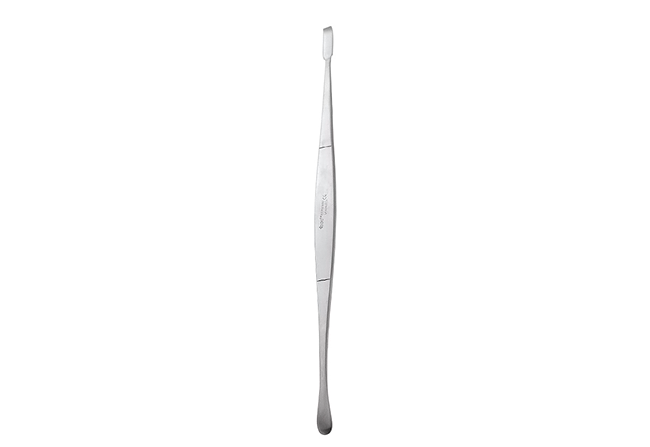
The Periosteal Howarth Elevator features a long, slender shaft with a slightly curved, blunt working end. The shape and angle of the elevator’s tip are designed to precisely lift the periosteum without causing significant damage to the surrounding tissues. The working end is typically flat, which helps in gently detaching the periosteum from the bone. Its ergonomic handle ensures that the dentist or oral surgeon has a firm grip, allowing for controlled and efficient use during delicate procedures.
This instrument’s primary purpose is to separate the periosteum from the bone in preparation for procedures such as tooth extractions, implant placements, and periodontal surgeries. By doing so, it helps to expose the bone for better visibility and access, which is essential for the success of the surgery. Additionally, the Periosteal Howarth Elevator can also be used to reflect soft tissues away from the surgical site, which reduces interference and improves the surgeon’s ability to work with precision.
Uses in Dentistry
One of the most common uses of the Periosteal Howarth Elevator is during tooth extractions, especially in cases where the tooth is impacted or requires significant force to be removed. By elevating the periosteum, the surgeon can access the underlying bone, making it easier to remove the tooth without damaging surrounding tissues. This is particularly useful in cases where the tooth is severely decayed or when performing a surgical extraction of a tooth that has broken or fractured.
The elevator is also widely used in implantology. When placing dental implants, it is important to access the bone while minimizing trauma to the surrounding soft tissues. The Periosteal Howarth Elevator plays a critical role in elevating the periosteum, allowing the surgeon to create space for the implant placement without disturbing the soft tissue unnecessarily.
Additionally, the instrument is frequently used in periodontal surgeries, such as flap surgeries for treating periodontal disease. In these cases, the periosteal elevator helps in accessing the deeper structures, such as the roots of teeth or the bone, to perform procedures like root planing or bone grafting.
Advantages
The Periosteal Howarth Elevator offers several advantages in dental surgeries. Its smooth, curved tip ensures minimal tissue damage while providing maximum control during the elevation of the periosteum. This reduces the risk of complications, such as excessive bleeding or tissue necrosis, which can prolong healing times and negatively impact the patient’s recovery.
The instrument is typically made from high-quality stainless steel, ensuring that it is durable, resistant to corrosion, and easy to sterilize. This makes it a reliable tool for dental professionals to use in both routine and complex surgeries.
Conclusion
In conclusion, the Periosteal Howarth Elevator is an essential tool in the armamentarium of dental surgeons, offering precision and control in elevating the periosteum during a variety of surgical procedures. Whether for tooth extractions, implant placements, or periodontal treatments, this instrument plays a vital role in minimizing trauma, enhancing visibility, and improving overall surgical outcomes. Its ergonomic design and high-quality construction make it an indispensable tool for dental professionals, ensuring both patient safety and surgical success.
₹1,300.00Original price was: ₹1,300.00.₹975.00Current price is: ₹975.00.Add to cart
You may add any content here from XStore Control Panel->Sales booster->Request a quote->Ask a question notification
At sem a enim eu vulputate nullam convallis Iaculis vitae odio faucibus adipiscing urna.
Ask an expert
We use cookies to ensure that we give you the best experience on our website. If you continue to use this site we will assume that you are happy with it.
 PERIOSTEAL HOWARTH ELEVATOR


Reviews
There are no reviews yet.