The Periosteal Hirschfeld Elevator is a highly specialized dental instrument designed for use in surgical procedures, particularly in periodontal and oral surgeries. Its main purpose is to lift and detach the periosteum, the tissue that covers the bone, from the underlying bone structure. This tool is crucial in both extraction and implant procedures, where a clear view of the bone is required, or when it is necessary to access the underlying bone for grafting, bone contouring, or other treatments.
Design and Features
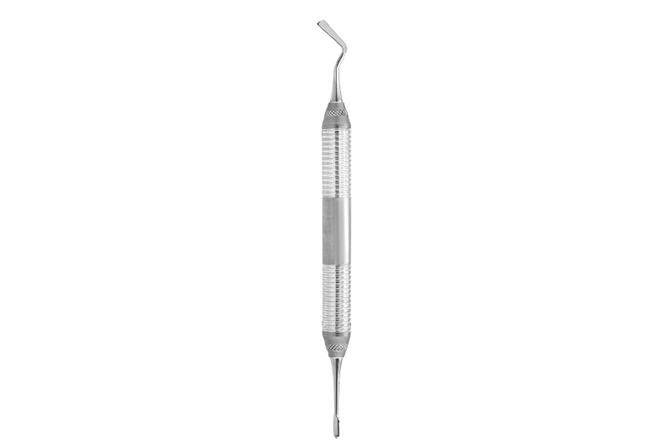
The Periosteal Hirschfeld Elevator is carefully engineered for precision and ease of use. It typically consists of a slender, curved blade attached to a sturdy handle. The blade’s curvature and sharpness are optimized for lifting the periosteum without causing undue trauma to the surrounding tissues. The instrument is available in various sizes and designs to suit different surgical needs and preferences.
The handle is usually ergonomically designed to provide the surgeon with maximum control during the procedure. Many versions of the Periosteal Hirschfeld Elevator feature a textured grip, reducing the risk of slippage, especially in delicate surgeries that require a steady hand.
Functionality
The primary function of the Periosteal Hirschfeld Elevator is to lift the periosteum away from the bone, which can be necessary for a variety of procedures. In dental extractions, for example, the periosteum must be separated from the bone to allow the surgeon to access the tooth and its roots without damaging the underlying bone. Similarly, in implant surgery, the periosteum must be moved aside to ensure that there is enough space for the placement of dental implants.
In addition to its use in extractions and implant placement, the Periosteal Hirschfeld Elevator is also an essential tool in soft tissue surgery, where precision in tissue separation is critical. This includes surgeries involving soft tissue grafting, periodontal flap surgery, or bone grafting procedures. The elevator’s delicate action allows the surgeon to move the periosteum with minimal tissue disruption, aiding in faster healing and better outcomes for patients.
Materials and Durability
Dental surgical instruments like the Periosteal Hirschfeld Elevator are made from high-quality materials to ensure strength, durability, and resistance to corrosion. Stainless steel is commonly used for its superior mechanical properties and ability to withstand the sterilization processes required for medical instruments. This material also ensures that the instrument remains sharp for longer periods, providing the precision needed during delicate surgical procedures.
Benefits
The main benefits of using the Periosteal Hirschfeld Elevator include enhanced precision, reduced trauma to surrounding tissues, and improved access to the surgical site. By using a periosteal elevator, dental surgeons can ensure better visibility and easier manipulation of the tissues and bone, which is particularly important for complex procedures.
Additionally, the use of high-quality materials ensures that the tool remains effective and reliable throughout its service life. Proper maintenance and sterilization allow the instrument to be used for multiple procedures, making it a cost-effective tool in any dental surgical setting.
Conclusion
The Periosteal Hirschfeld Elevator is an indispensable tool in modern dental surgeries. Its precision, reliability, and ergonomic design make it an essential instrument for periodontists and oral surgeons. Whether it is used for extractions, implant placement, or soft tissue surgery, this tool ensures that the periosteum is managed with minimal trauma and maximum efficiency. Its durability and easy sterilization also ensure that it remains a staple in dental surgical kits for many years.
₹1,300.00Original price was: ₹1,300.00.₹975.00Current price is: ₹975.00.Add to cart
You may add any content here from XStore Control Panel->Sales booster->Request a quote->Ask a question notification
At sem a enim eu vulputate nullam convallis Iaculis vitae odio faucibus adipiscing urna.
Ask an expert
We use cookies to ensure that we give you the best experience on our website. If you continue to use this site we will assume that you are happy with it.
 PERIOSTEAL HIRSCHFELD ELEVATOR


Reviews
There are no reviews yet.