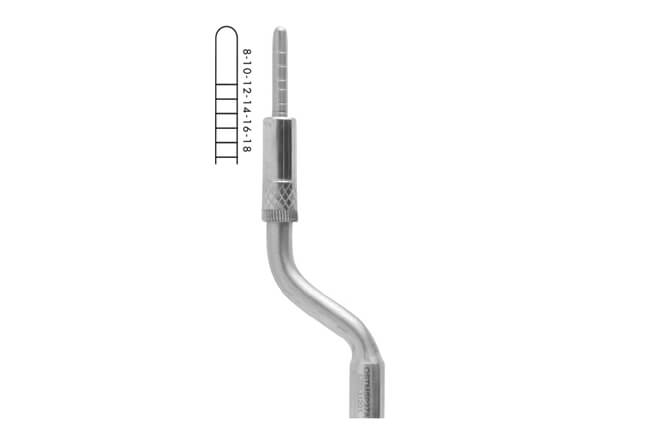
OSTEOTOMES CONVEX 3.2 – 3.7
Osteotomes are specialized surgical instruments used primarily in orthopedics and oral surgery to cut or shape bone tissue. They come in various shapes and sizes, depending on the procedure and the specific requirements of the surgery. The convex osteotomes in the size range of 3.2 to 3.7 millimeters are commonly utilized in procedures that involve bone reshaping or bone removal with precision.
Design and Characteristics
Osteotomes with a convex design are distinguished by their curved cutting edge, which allows for better control and a more efficient cutting process. This convex shape helps surgeons to create smooth bone surfaces without causing excessive bone fragmentation or irregularities. The sizes of these instruments, ranging from 3.2 mm to 3.7 mm, strike a balance between versatility and precision, making them suitable for a wide array of surgical interventions.
The 3.2 mm to 3.7 mm osteotomes are designed with a sturdy handle and a blade that tapers to a fine edge, allowing for easy maneuvering during delicate bone procedures. These osteotomes are generally made from high-quality stainless steel or other durable metals to ensure strength and resistance to wear. The convex blade shape further enhances their effectiveness, allowing them to gently contour and shape bone, reducing the risk of fractures or inadvertent damage to surrounding tissues.
Applications
Osteotomes in the 3.2 – 3.7 mm range are most commonly used in procedures such as:
- Orthopedic Surgery: These instruments are ideal for correcting deformities or adjusting bone alignment. In joint replacement surgeries, osteotomes can be used to carefully reshape or remove bone segments to prepare the joint for implantation. Their precision is vital when performing procedures such as osteotomies to realign bones or improve joint mechanics.
- Oral and Maxillofacial Surgery: In oral surgery, particularly during procedures such as dental implant placement or corrective jaw surgery (orthognathic surgery), convex osteotomes are used to refine bone contours. They allow the surgeon to make small, controlled cuts, ensuring minimal trauma to the bone and surrounding structures. They are also valuable in removing impacted teeth or reshaping the jaw for aesthetic or functional improvement.
- Podiatric Surgery: In foot and ankle surgeries, osteotomes are used to correct deformities such as bunions or hammer toes. The curved blade enables precise bone cuts, improving the alignment and function of the foot.
Advantages of Convex Osteotomes 3.2 – 3.7
The convex design offers several advantages in surgical applications. First, it facilitates smoother bone cuts, reducing the likelihood of jagged edges or unwanted fractures. The 3.2 to 3.7 mm size range is perfect for procedures that require precision without excessive force. These instruments allow for minimal soft tissue damage, enhancing recovery times and improving patient outcomes.
Additionally, the moderate size of these osteotomes ensures that they are versatile enough to handle different surgical challenges, from delicate bone trimming to more extensive reshaping. Their ergonomic design also provides a comfortable grip for the surgeon, allowing for extended periods of use without compromising control or accuracy.
Conclusion
Osteotomes Convex 3.2 – 3.7 mm are valuable tools in various surgical fields due to their precision, efficiency, and adaptability. Whether used in orthopedic, oral, or podiatric procedures, they enable surgeons to perform complex bone surgeries with greater ease and safety. Their convex design, coupled with their size range, makes them an essential part of the surgeon’s toolkit for bone reshaping and removal.

 OSTEOTOMES CONVEX 3.2 – 3.7


Reviews
There are no reviews yet.