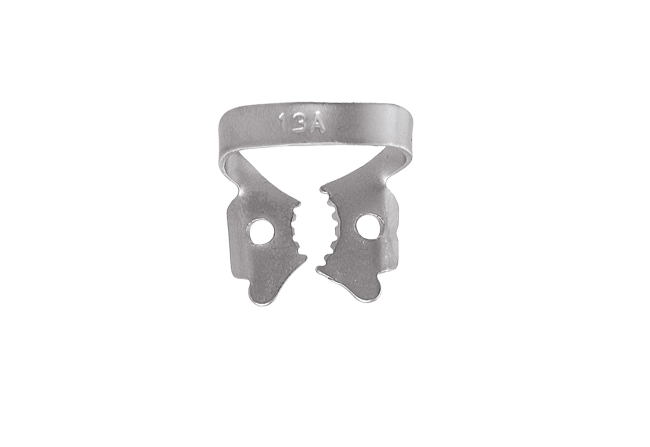
A Left Mandibular Molar Clamp with Serrated Jaw is a dental instrument designed specifically for use in procedures involving the left side of the lower jaw (mandible), particularly around the molar teeth. The clamp is a type of dental dam clamp, which is crucial for isolating a tooth during procedures like restorative work, root canal therapy, or filling placement. Its serrated jaws help secure the dental dam firmly in place, improving both the accuracy of the procedure and the overall outcome.
Design and Functionality
The Left Mandibular Molar Clamp typically features a metal construction, usually stainless steel, making it durable and resistant to corrosion. The serrated jaw design refers to the small, tooth-like projections on the clamp’s jaws, which are designed to provide a firm grip on the tooth and prevent slipping. This feature is particularly important when working with molars, which are larger and more complex in shape compared to other teeth.
The clamp’s curved structure allows it to fit comfortably around the left mandibular molar, typically the first or second molar, depending on the clinical situation. The clamp is positioned on the tooth in such a way that the dental dam, a thin sheet of latex or non-latex material, can be stretched over the tooth and held securely in place. This isolation ensures that the treatment area is dry, free from contamination, and unaffected by saliva or other oral fluids.
The serrations on the jaws of the clamp increase the friction between the clamp and the tooth, which is essential for holding the dental dam in place, especially when working on the lower molars. These teeth are located farther back in the mouth and are more challenging to access, making the additional grip provided by the serrations crucial for a smooth procedure.
Application in Dentistry
The Left Mandibular Molar Clamp with Serrated Jaw is used in a variety of dental procedures, including:
Restorative Dentistry: During fillings or crown procedures, the clamp isolates the tooth, ensuring that the area remains dry. This is especially important when working with materials such as composite resins, which can be sensitive to moisture.
Endodontics (Root Canal Therapy): The clamp plays a vital role in root canal procedures by isolating the infected tooth and preventing the introduction of contaminants that could compromise the treatment. The isolation also helps to protect the patient’s gums and surrounding soft tissues from contact with potentially harmful chemicals.
Periodontal Treatment: In cases where a periodontal treatment is necessary, the clamp helps to isolate specific areas of the tooth, allowing for targeted interventions.
Dental Surgery: In surgical procedures involving the gums or other soft tissues around the molars, the clamp ensures that the treatment area is isolated and free from contamination.
Advantages of the Serrated Design
The serrated jaw of the Left Mandibular Molar Clamp offers several distinct advantages:
Improved Grip: The serrations create additional friction, which helps prevent the clamp from slipping off the tooth. This is particularly beneficial for molars, which have irregular surfaces and are located in hard-to-reach areas.
Greater Stability: The enhanced grip ensures that the dental dam remains taut and positioned correctly throughout the procedure, which is crucial for maintaining a clean and dry working environment.
Reduced Risk of Discomfort or Injury: The serrations are carefully designed to prevent them from causing harm to the tooth or soft tissues. They securely hold the dam without exerting excessive pressure on the tooth surface.
Conclusion
The Left Mandibular Molar Clamp with Serrated Jaw is a highly specialized dental tool that significantly enhances the precision and effectiveness of dental procedures, especially those involving the lower molars. Its serrated jaw design provides a strong, reliable grip that ensures the dental dam stays securely in place, thus allowing the dentist to perform procedures with greater accuracy and reduced risk of contamination. This tool is indispensable in a wide range of dental applications, from restorative and endodontic treatments to periodontal surgery.
₹1,300.00Original price was: ₹1,300.00.₹975.00Current price is: ₹975.00.Add to cart
You may add any content here from XStore Control Panel->Sales booster->Request a quote->Ask a question notification
At sem a enim eu vulputate nullam convallis Iaculis vitae odio faucibus adipiscing urna.
Ask an expert
We use cookies to ensure that we give you the best experience on our website. If you continue to use this site we will assume that you are happy with it.

 LEFT MANDIBULAR MOLAR CLAMP WI...


Reviews
There are no reviews yet.