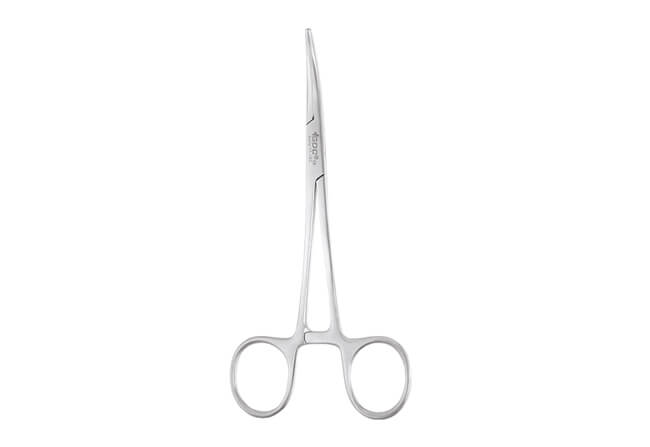
The Kelly Curved forceps are a type of surgical instrument widely used in various medical fields, particularly in surgeries requiring precision and control over tissue manipulation and blood vessels. Named after Dr. Edward W. Kelly, a prominent figure in the development of surgical tools, the Kelly Curved forceps have become indispensable in both general and specialized surgery due to their design and functionality.
The primary purpose of the Kelly Curved forceps is to clamp blood vessels, tissues, and other anatomical structures during surgery. The curved shape allows for better access to hard-to-reach areas, making it especially useful in procedures involving deeper tissues or areas obstructed by other organs. It is commonly used in gynecological, abdominal, and orthopedic surgeries, but can also find application in urology and cardiovascular procedures.
Design and Structure The Kelly Curved forceps are typically made from stainless steel, ensuring durability, strength, and resistance to corrosion. They feature a distinctive curved design, which differentiates them from straight forceps. The curved tips are serrated, which provides a secure grip on tissues and blood vessels without causing excessive damage. The jaws of the instrument are usually wider than those of other forceps, making them effective in clamping larger tissues or vessels.
The handle of the Kelly Curved forceps is usually straight, allowing for a firm grip and precise control during surgery. Most models feature a locking mechanism, which ensures that the forceps can be securely clamped in place without the need for continuous manual pressure. This locking mechanism is a key feature of the Kelly forceps, as it allows for hands-free operation, which is particularly useful during longer procedures or when the surgeon needs to free up a hand.
Applications The Kelly Curved forceps are versatile and can be used in a variety of medical and surgical settings. One of the most common applications is in hemostasis, where the forceps are used to clamp blood vessels and prevent bleeding. This is crucial in surgeries, especially those involving extensive dissection of tissues. By controlling bleeding, the surgeon can maintain a clear surgical field, which is essential for the success of the procedure.
In addition to their use in hemostasis, Kelly Curved forceps are also employed to manipulate tissues, particularly during dissection. The forceps allow for the precise handling of tissues, which is important in delicate surgeries where even slight damage to surrounding structures can have significant consequences. The curved shape of the forceps makes it easier to navigate around obstacles and access deep or confined areas.
Conclusion The Kelly Curved forceps are an essential tool in modern surgical practice. Their versatile design, strength, and ability to handle a variety of surgical tasks make them a go-to instrument in both emergency and elective procedures. Their precision and reliability have earned them a prominent place in the surgical instrument repertoire, making them an invaluable asset in the hands of skilled surgeons. Whether it’s for clamping vessels, manipulating tissues, or maintaining hemostasis, the Kelly Curved forceps continue to be an essential tool in ensuring safe and effective surgical outcomes.
₹1,300.00Original price was: ₹1,300.00.₹975.00Current price is: ₹975.00.Add to cart
You may add any content here from XStore Control Panel->Sales booster->Request a quote->Ask a question notification
At sem a enim eu vulputate nullam convallis Iaculis vitae odio faucibus adipiscing urna.
Ask an expert
We use cookies to ensure that we give you the best experience on our website. If you continue to use this site we will assume that you are happy with it.

 KELLY CURVED


Reviews
There are no reviews yet.