
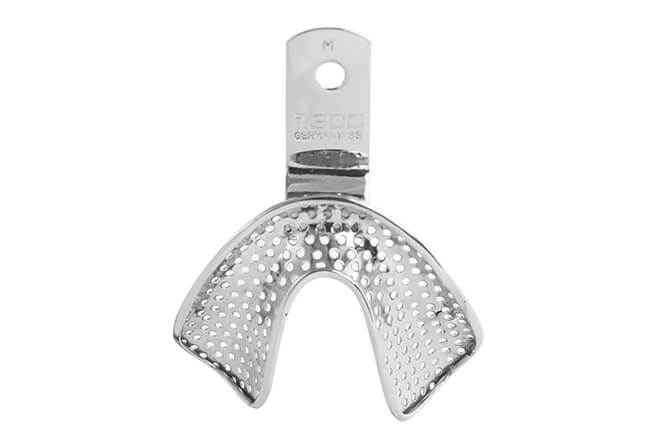
An impression tray edentulous perforated lower medium is an essential dental tool used in the creation of accurate molds (impressions) for patients who have lost all of their teeth, a condition known as edentulism. These trays are designed specifically for the lower arch of an edentulous patient’s mouth, which is important for creating prosthetic devices such as dentures. The term “perforated” refers to the tray’s design, which includes small holes that allow impression material to flow through and help capture finer details of the mouth’s anatomy.
Key Features of an Impression Tray Edentulous Perforated Lower Medium
1. Design and Functionality: The impression tray is typically made of durable, lightweight materials such as stainless steel or plastic. For edentulous patients, these trays are specially designed to fit the shape and size of the lower arch. The “medium” designation refers to the tray’s size, which is intended to be a standard option for most adult patients. The perforated nature of the tray allows the impression material to form a secure bond with the surface of the tray, improving the accuracy of the impression and ensuring it does not shift during the process.
2. Importance for Edentulous Patients: For edentulous patients, taking an accurate impression of the oral cavity is crucial for the fabrication of well-fitting dentures or other prostheses. A properly fitting impression tray captures the contours of the mouth, which is particularly important in the absence of teeth, as the tissue is more flexible and can change shape easily. The perforations ensure that the impression material can fill these contours precisely, capturing the necessary details for a successful denture fitting.
3. Ease of Use and Comfort: The “medium” size is designed to fit the average lower arch, but it may be adjusted slightly if the patient’s mouth requires a slightly different size. Comfort is a priority during the impression-taking process, especially for edentulous patients, who may have sensitive gums or soft tissues. The perforated design reduces the likelihood of the impression material causing discomfort, as it allows for better distribution and less bulk around the gums and oral tissues.
4. Clinical Application: Once the impression tray is placed in the patient’s mouth and filled with impression material (such as alginate, silicone, or polyether), the patient is asked to bite down gently. The perforated holes in the tray allow the material to flow through and take an accurate impression of the soft tissues, including the alveolar ridge and the surrounding mucosa. After the material hardens, a detailed mold of the lower arch is created, which is sent to the dental laboratory for the fabrication of a custom prosthetic device.
5. Benefits for Dentists: For dental professionals, the use of an edentulous perforated impression tray reduces the chances of an inaccurate or poorly-fitting mold. It ensures that the impression material adheres properly and captures all necessary anatomical details. Additionally, it speeds up the impression-taking process, allowing for a more efficient and effective workflow in the clinic.
Conclusion:
The impression tray edentulous perforated lower medium is a vital tool in restorative dentistry. It ensures the accurate capture of the lower arch of edentulous patients, enabling the production of well-fitting dentures and other prosthetic solutions. By providing a secure and comfortable fit, the tray contributes to both the success of the treatment and the overall satisfaction of the patient.


Reviews
There are no reviews yet.