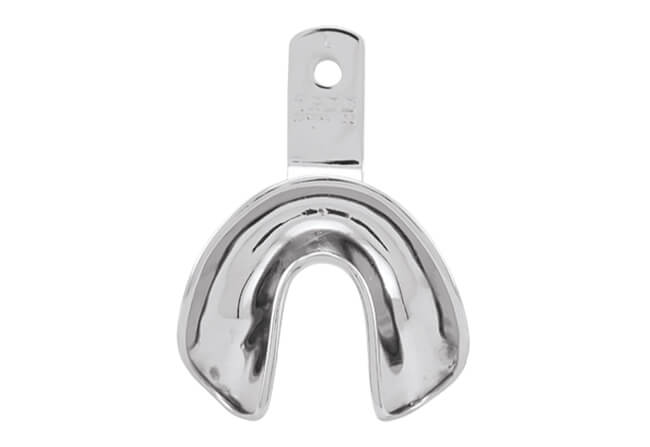
An Impression Tray Edentulous Non-Perforated Lower L is a specific dental tool designed for taking precise impressions of the lower jaw in edentulous patients, who are individuals without teeth. These trays are crucial in the field of prosthodontics, as they help dental professionals create accurate molds necessary for the fabrication of dentures, partial dentures, and other dental prostheses. Understanding the functionality and design of these trays is important for both dental professionals and patients undergoing treatment.
Purpose and Functionality
The primary purpose of an Impression Tray Edentulous Non-Perforated Lower L is to capture the precise shape, size, and anatomy of the edentulous lower arch. This is essential for creating prosthetic devices such as dentures that will fit comfortably and function well. The “non-perforated” design refers to the absence of holes in the tray, distinguishing it from perforated trays that have small openings to allow impression material to flow through and lock in place. The non-perforated version offers specific advantages, particularly in capturing a cleaner, more accurate impression for certain types of impression materials.
Design and Features
The “Lower L” designation refers to the tray’s shape and size, specifically designed to fit the lower jaw of an edentulous patient. These trays are available in various sizes to ensure a snug fit for different patients. The “L” typically indicates that the tray is designed for a lower arch, while other letters may be used for upper or other specialized trays.
Non-perforated trays are especially useful when a more controlled impression material is needed. Without perforations, the tray provides a smooth surface that prevents the impression material from seeping through the tray. This design ensures that the impression material remains in place during the impression-taking process, allowing for better control and detail in the final mold. This is particularly important when working with materials like elastomeric compounds that may have a tendency to distort if exposed to excessive pressure or movement.
Material and Durability
Impression trays like the Edentulous Non-Perforated Lower L are typically made from durable, rigid materials such as stainless steel or high-quality plastic. The rigid nature of the tray helps maintain the integrity of the impression during the process, preventing warping or bending that could compromise the final result. Stainless steel trays are also reusable, making them a cost-effective option for dental professionals, while plastic trays are often single-use and more affordable for short-term treatments.
Procedure and Importance in Prosthetic Dentistry
To take an impression using the Impression Tray Edentulous Non-Perforated Lower L, the tray is first selected for the appropriate size and shape of the patient’s lower arch. Impression material, such as alginate or silicone, is then placed inside the tray. The tray is carefully positioned in the patient’s mouth to capture the full shape of the lower jaw and surrounding soft tissues, ensuring a detailed and accurate impression. Once the material sets, the tray is removed, and the impression is sent to a dental laboratory for the fabrication of the appropriate prosthesis.
These trays are essential in providing a well-fitting and comfortable prosthetic device. Without a precise impression, dentures may not fit properly, leading to discomfort, difficulty in speaking or eating, and an increased risk of further oral health problems.
Conclusion
In summary, the Impression Tray Edentulous Non-Perforated Lower L plays a crucial role in dental practices that cater to edentulous patients. By providing a clean and accurate impression of the lower jaw, these trays help ensure that prosthetic devices like dentures are crafted to fit the patient comfortably and function effectively. The non-perforated design allows for precise control of the impression material, ensuring that the final prosthesis provides optimal comfort and performance. Whether made of stainless steel or plastic, these trays are indispensable tools in the creation of high-quality dental prosthetics.


Reviews
There are no reviews yet.