An articulator is a mechanical device that mimics the movement and function of the temporomandibular joint (TMJ) and jaws. It is an indispensable tool in dentistry, particularly in the fields of prosthodontics, orthodontics, and restorative dentistry. By simulating the natural motion of the human jaw, an articulator allows dentists and dental technicians to analyze, plan, and execute treatments with precision and efficiency.
Anatomy and Functionality
The design of an articulator includes upper and lower frameworks that represent the maxilla (upper jaw) and mandible (lower jaw). These components are connected by adjustable hinges that simulate jaw movements, including opening, closing, and lateral excursions. Some advanced articulators can replicate more complex motions, such as protrusion and retrusion.
Articulators are often classified based on their range of motion and level of adjustability:
Non-Adjustable Articulators: These basic devices provide limited movement and are primarily used for simple procedures like fabricating single crowns or dentures. They are cost-effective but may not reflect the patient’s unique jaw dynamics.
Semi-Adjustable Articulators: These are more sophisticated and can replicate individual patient parameters, such as condylar angles and occlusal plane orientation. They are widely used in prosthodontics and restorative dentistry.
Fully Adjustable Articulators: These high-end devices allow for precise adjustments to replicate all possible jaw movements. They are used for complex cases, such as full-mouth rehabilitation or temporomandibular joint disorder (TMD) management.
Applications in Dentistry
The primary role of an articulator is to aid in the fabrication of dental prostheses, such as crowns, bridges, and dentures. By mounting models of a patient’s teeth onto the articulator, dental professionals can assess occlusion (bite) and make necessary adjustments to ensure proper fit and function. This reduces the need for multiple patient visits and minimizes errors during the treatment process.
Articulators are also essential in diagnosing and treating occlusal problems. Dentists use these devices to evaluate how a patient’s teeth interact during various jaw movements, identifying potential issues such as malocclusion, bruxism, or TMJ disorders.
Benefits of Using an Articulator
Incorporating an articulator into dental practice enhances the accuracy of treatment outcomes. It provides a controlled environment for testing different scenarios without subjecting the patient to unnecessary discomfort. Additionally, it fosters better communication between dentists and dental technicians, ensuring that all parties are aligned in achieving optimal results.
Conclusion
The articulator stands as a cornerstone in modern dentistry, bridging the gap between diagnosis and treatment. Its ability to replicate human jaw movements with precision empowers dental professionals to deliver high-quality care, improving both functionality and aesthetics for their patients.
₹1,300.00Original price was: ₹1,300.00.₹975.00Current price is: ₹975.00.Add to cart
You may add any content here from XStore Control Panel->Sales booster->Request a quote->Ask a question notification
At sem a enim eu vulputate nullam convallis Iaculis vitae odio faucibus adipiscing urna.
Ask an expert
We use cookies to ensure that we give you the best experience on our website. If you continue to use this site we will assume that you are happy with it.


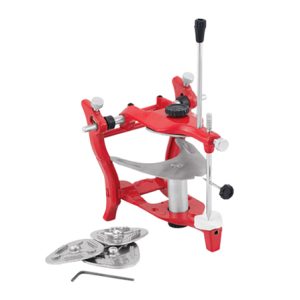 ARTICULATOR


Reviews
There are no reviews yet.