
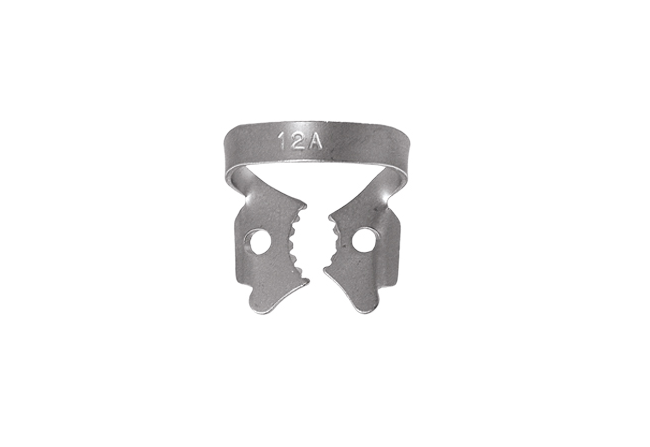
A Right Mandibular Molar Clamp with Serrated Jaws is a specialized dental instrument designed to secure a rubber dam around a patient’s right mandibular (lower jaw) molar during various dental procedures. This clamp plays an essential role in maintaining a dry working field, which is crucial for successful dental treatments, particularly when working on the posterior teeth.
Structure and Design
The clamp itself is typically made of stainless steel, ensuring durability and corrosion resistance. The design of the clamp is such that it fits around the crown of the molar, providing a secure grip without causing damage to the tooth. The jaws of the clamp are serrated, which enhances its ability to maintain a firm hold on the tooth, preventing slippage during treatment. The serrations, usually in the form of small ridges or grooves, are strategically placed on the clamp’s contacting surface to provide an increased frictional grip.
The clamp is also designed to fit the right mandibular molar specifically, meaning its shape and size are tailored for use on this particular tooth in the lower right quadrant of the mouth. This specificity ensures that the clamp can securely isolate the tooth while avoiding interference with adjacent teeth or the gum tissue.
Functionality
The primary function of the right mandibular molar clamp with serrated jaws is to anchor a rubber dam in place during dental procedures such as restorations, root canals, or other treatments that require isolation of the tooth from the surrounding oral environment. The rubber dam acts as a barrier, preventing moisture from saliva, blood, or other fluids from contaminating the area being worked on. It also protects the patient from accidentally swallowing debris or instruments.
The clamp’s serrated jaws enhance its gripping ability, making it less likely to shift or dislodge during treatment. This is particularly important when working on the back teeth, which can be harder to reach and may require more stability. The clamp helps maintain a secure fit by exerting a light but firm pressure around the tooth’s crown. This pressure is distributed evenly, minimizing the risk of causing damage to the tooth’s enamel or surrounding gum tissues.
Usage in Clinical Practice
In clinical practice, the right mandibular molar clamp with serrated jaws is used in combination with a rubber dam system. The rubber dam is stretched over the clamp and secured with dental floss or a rubber dam frame. The clamp itself is placed on the tooth with the serrated jaws making contact with the enamel. The dentist or dental assistant will carefully adjust the clamp to ensure a tight, secure fit. Once the clamp is in place, the rubber dam is positioned and tensioned, ensuring that the treated area remains dry and isolated from contaminants.
Benefits of Serrated Jaws
The serrated design of the jaws offers several key advantages. First, it significantly reduces the likelihood of the clamp slipping off the tooth, especially when working on the molars, which have a relatively large and uneven surface. The increased frictional grip from the serrations allows for greater precision and control during procedures.
Additionally, serrated jaws help distribute the force applied by the clamp more evenly, preventing localized pressure points that could potentially damage the tooth or gum tissue. This is crucial for patient comfort and for ensuring the success of the procedure being performed.
Conclusion
The right mandibular molar clamp with serrated jaws is a vital tool in modern dentistry, designed to provide optimal isolation and protection during various procedures. Its durable construction, ergonomic design, and serrated gripping mechanism ensure that dental professionals can work efficiently and with confidence, knowing that the clamp will maintain a secure fit throughout the treatment. This tool contributes significantly to achieving high-quality, precise dental work while safeguarding the patient’s comfort and safety.


Reviews
There are no reviews yet.