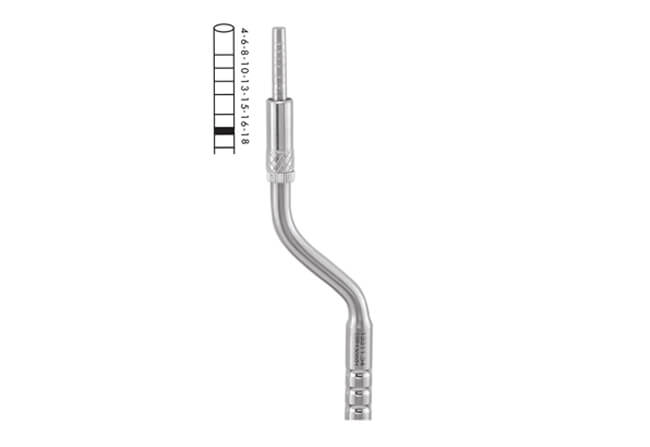
Osteotomes are essential instruments in orthopedic and dental surgeries, designed for shaping or cutting bone with precision. The concave osteotomes, specifically the 3.7–4.2 mm range, serve a crucial role in specialized surgical procedures, including implantology, bone grafting, and sinus lift surgeries. These instruments are meticulously crafted to meet the demands of surgeons who require precise and controlled manipulation of bone structures.
Design and Features
Concave osteotomes in the 3.7–4.2 mm size range are designed with ergonomic and functional features that cater to delicate surgical tasks. Their concave structure allows for efficient bone compaction while minimizing trauma to surrounding tissues. The concavity also aids in preserving the integrity of the bone, making these instruments ideal for procedures where maintaining the density and structure of the bone is critical.
These osteotomes are typically constructed from high-grade surgical stainless steel, ensuring durability, resistance to corrosion, and ease of sterilization. The tips are carefully honed to provide sharpness and precision, while the handles are ergonomically designed for a secure and comfortable grip, reducing hand fatigue during prolonged procedures.
Applications in Surgery
The 3.7–4.2 mm concave osteotomes are widely used in dental implantology, particularly in the placement of implants in areas with limited bone density. The concave design helps compact bone during the preparation of implant sites, providing enhanced stability for the implants. This is especially advantageous in areas where bone augmentation is required, as it helps reduce the need for additional grafting materials.
In sinus lift procedures, these osteotomes are instrumental in elevating the sinus membrane with minimal risk of perforation. The precise size range allows surgeons to work in confined spaces, achieving the desired elevation with controlled force. The compacting action also promotes osseointegration, which is critical for the long-term success of dental implants.
Benefits and Advantages
The primary advantage of concave osteotomes in this size range is their ability to compact bone effectively without excessive removal. This characteristic makes them highly beneficial in preserving natural bone while optimizing the surgical outcome. Additionally, their versatility across various surgical applications adds to their value in a clinician’s toolkit.
Another significant benefit is the tactile feedback provided by these instruments. Surgeons can gauge the density and texture of the bone during the procedure, allowing them to make real-time adjustments for better accuracy and outcomes.
Conclusion
Concave osteotomes 3.7–4.2 mm are indispensable tools in modern surgical practices, offering precision, versatility, and efficiency. Their design and functionality cater to the needs of delicate bone manipulation, making them a preferred choice for surgeons in both dental and orthopedic domains. With proper care and usage, these instruments contribute significantly to achieving successful surgical outcomes.
₹1,300.00Original price was: ₹1,300.00.₹975.00Current price is: ₹975.00.Add to cart
You may add any content here from XStore Control Panel->Sales booster->Request a quote->Ask a question notification
At sem a enim eu vulputate nullam convallis Iaculis vitae odio faucibus adipiscing urna.
Ask an expert
We use cookies to ensure that we give you the best experience on our website. If you continue to use this site we will assume that you are happy with it.

 OSTEOTOMES CONCAVE 3.7 – 4.2...


Reviews
There are no reviews yet.