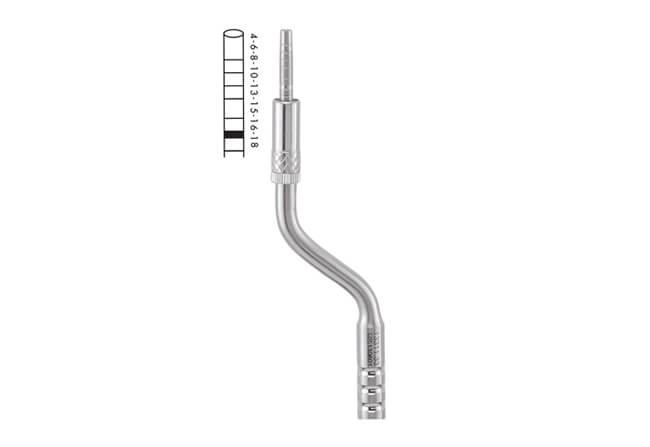
Osteotomes Concave 3.2 – 3.7 are specialized surgical instruments designed to facilitate precise bone manipulation in various medical procedures. These tools are integral in orthopedic, dental, and craniofacial surgeries, offering unmatched accuracy and control to achieve optimal outcomes. Their unique concave design and size range, spanning 3.2 mm to 3.7 mm, make them versatile for diverse clinical applications.
Key Features and Design
The concave osteotomes are characterized by their specialized blade design, which tapers smoothly to ensure efficient bone contouring and manipulation. This curvature allows surgeons to create controlled depressions, refine bone surfaces, or split bone structures with minimal trauma to surrounding tissues.
The size range of 3.2 mm to 3.7 mm caters to procedures requiring meticulous precision, especially in areas where access is limited or delicate bone structures are involved. These dimensions are particularly advantageous in procedures such as sinus lifts, alveolar ridge augmentation, and osteoplasty.
Crafted from high-grade stainless steel or titanium, these instruments offer exceptional durability and resistance to corrosion, ensuring their reliability during repeated sterilization cycles. The ergonomic handles are designed for a secure grip, minimizing hand fatigue and enhancing the surgeon’s ability to perform intricate movements with confidence.
Clinical Applications
Dental Implantology
In dental surgeries, osteotomes Concave 3.2 – 3.7 are indispensable tools for performing sinus lift procedures and preparing implant sites. Their concave structure helps shape and expand the bone without causing excessive compression, which can jeopardize implant stability. This ensures optimal osseointegration and long-term success of dental implants.
Orthopedic Procedures
These osteotomes are also used in orthopedic surgeries for precise bone sculpting, especially in cases requiring controlled bone removal or reshaping. Their design minimizes the risk of inadvertent damage to soft tissues and adjacent structures.
Craniofacial Surgeries
In reconstructive or cosmetic craniofacial surgeries, osteotomes with concave blades enable surgeons to refine bone contours for aesthetic or functional purposes. The size range of 3.2 mm to 3.7 mm makes them suitable for detailed work in facial bone areas.
Advantages of Using Concave Osteotomes
The concave design offers several advantages:
Reduced Bone Trauma: The gradual taper reduces stress on the bone, preserving its integrity.
Precision and Control: Surgeons can achieve exact cuts and contours, vital for delicate procedures.
Versatility: The range of sizes allows the osteotomes to be used in various anatomical locations.
Enhanced Handling: Ergonomic design ensures ease of use, even during prolonged surgeries.
Conclusion
Osteotomes Concave 3.2 – 3.7 represent a blend of precision engineering and clinical versatility. Their role in enhancing surgical outcomes and ensuring patient safety underscores their importance in modern medical practice. With these tools, surgeons can achieve remarkable results, addressing complex challenges with precision and confidence.
₹1,300.00Original price was: ₹1,300.00.₹975.00Current price is: ₹975.00.Add to cart
You may add any content here from XStore Control Panel->Sales booster->Request a quote->Ask a question notification
At sem a enim eu vulputate nullam convallis Iaculis vitae odio faucibus adipiscing urna.
Ask an expert
We use cookies to ensure that we give you the best experience on our website. If you continue to use this site we will assume that you are happy with it.

 OSTEOTOMES CONCAVE 3.2 – 3.7...


Reviews
There are no reviews yet.